



The 2026 Definitive Guide to Sustainable Vaping: Compliance, Flavor & High-Capacity Ecosystems
Introduction: The End of the Single-Use Vaping Era
2026 marks the most significant structural shift in the global vaping market since the launch of first-generation e-cigarettes. What began as a wave of national disposable bans across the EU has evolved into a full industry transition toward sustainable, high-capacity rechargeable ecosystems—driven by regulation, environmental policy, and maturing consumer demand for better value and more consistent performance.
For adult vapers, the transition raises one critical question: can reusable systems deliver the same instant, bold flavor and convenience that made disposables ubiquitous? For vape retailers and distributors, the stakes are even higher: misaligned inventory can lead to regulatory fines, dead stock, and lost market share during the largest consumer migration in the industry’s history.
This guide synthesizes the latest regulatory analysis from the European Commission, peer-reviewed public health research from Cochrane and NHS, and real-world retail data from across the EU and US. It is designed to serve both individual adult vapers seeking a smooth transition, and B2B businesses building compliant, profitable 2026–2027 inventory strategies.
1. 2026 Global Regulatory Landscape: Full Compliance Breakdown
1.1 European Union: TPD3 Revision & The Bloc-Wide Phase-Out
In June 2026, the European Commission officially launched the public consultation phase for the third revision of the Tobacco Products Directive (TPD3)—the most sweeping update to EU vaping regulation since 2016. The draft framework expands regulation to cover all nicotine delivery products and prioritizes two core changes for hardware:
- Formal classification of single-use non-refillable vapes as high-priority environmental waste, with a proposed bloc-wide sales ban targeted for 2027 implementation
- Mandatory extended producer responsibility (EPR) requirements for all device manufacturers, forcing brands to fund end-of-life collection and recycling
Multiple member states have already moved ahead of EU-level rules: Ireland’s Public Health (Single Use Vapes) Bill 2025 is set to take effect in late 2026, joining France, Belgium and Bulgaria which already enforce full national disposable bans.
1.2 United Kingdom: Full Ban Enforcement & WEEE Recycling Rules
The UK’s Tobacco and Vapes Act 2026 went into full force on April 1, 2026, banning the sale and supply of all single-use disposable vapes, including nicotine-free variants. Retailers face fines of up to £5,000 per violation, with criminal penalties for repeat offenses.
Alongside the ban, UK WEEE (Waste Electrical and Electronic Equipment) regulations introduced dedicated Category 15 classification for vaping products in August 2025, with mandatory recycling targets taking full effect in August 2026. All retailers selling vaping hardware are legally required to offer free take-back of old devices, and importers must fund approved waste collection schemes.
1.3 United States: PMTA Enforcement & State-Level EPR Rules
While the US has not implemented a federal disposable ban, FDA PMTA enforcement actions have removed over 10 million unauthorized disposable products from the market since 2024. States including California, New York and Washington have passed state-level EPR laws that add $1.20–$2.50 in compliance costs per single-use unit, eroding the thin profit margins that made disposables a retail staple.
For cross-border distributors and EU vape shops, single-use disposable inventory now carries three compounding risks: regulatory seizure, mandatory EPR compliance costs, and plummeting consumer demand as users switch to compliant alternatives. High-capacity rechargeable systems are the only product category with growing demand and stable regulatory status across all major Western markets.
2. The Dual Case for Sustainable Vaping: Environmental & Economic
2.1 Environmental Impact: The Structural E-Waste Solution
The core environmental problem with single-use vapes is their built-in obsolescence: every device contains a lithium-ion battery, copper circuitry, plastic casing and residual e-liquid, all discarded after just a few days of use. The modular design of high-capacity eco-systems solves this at the source:
- A single rechargeable device body has a 1–3 year lifespan, replacing 50–100 disposable units over its use cycle
- Only small consumable components (pods/coils) require replacement, reducing lithium battery waste by 90–96% per user annually
- Standardized pod form factors and take-back schemes make material recovery far more cost-effective for waste management providers
2.2 Economic Value: Lower Costs for Users, Higher Margins for Retailers
The financial case for switching applies equally to end users and B2B businesses:
For individual adult vapers:
- Average daily disposable user annual spending: $960–$1,400
- Average high-capacity pod system annual spending: $300–$450 (device + pods + e-liquid)
- Annual savings: $600–$1,020 per user, with break-even achieved within 2–3 weeks of purchase
For retail and wholesale businesses:
- High-capacity hardware + refill e-liquid delivers 35–50% higher profit margins per sale compared to low-margin disposables
- Recurring consumable purchases drive stable monthly repeat revenue, rather than one-off disposable transactions
- Lower compliance risk reduces operational overhead and potential regulatory fines
3. The Flavor Preservation Breakthrough: Why 2026 Hardware Eliminates the Gap
The single biggest barrier to user adoption of reusable systems has long been flavor fade—early pod systems suffered from fast carbon buildup and inconsistent heating that muted taste after just a few refills. 2026-generation hardware has fully resolved this issue through three core technological advancements.
3.1 Dual & Triple Mesh Coil Architecture
Legacy single-wire coils create uneven heat distribution, hot spots and rapid flavor degradation. Modern dual and triple mesh designs increase heating surface area by 200% or more, delivering uniform vaporization across the entire wick surface.
The result is richer, more defined flavor extraction from first puff to last, with consistent intensity across the full lifespan of the pod. Top-tier devices like the ELFBAR D3 25000 use triple mesh configurations to maximize flavor depth even at high power outputs.
3.2 Anti-Carbon Deposition Wick Technology
Carbon residue buildup on coil surfaces is the primary cause of flavor degradation in reusable pods. 2026 premium pods use hybrid ceramic-organic cotton wick blends engineered to resist carbon adhesion, paired with optimized thermal management chipsets that prevent localized overheating.
Independent lab testing shows top-tier pods maintain 92% flavor fidelity across their full usable lifespan, compared to 40–60% degradation in older generation pod systems.
3.3 Smart Chipset Stable Power Regulation
Single-use disposables suffer from noticeable performance decline as their battery drains, with weaker vapor and muted flavor in the final 20% of the device’s life. Rechargeable systems with precision chipsets eliminate this entirely, delivering calibrated, consistent power output from full charge to empty.
Devices like the Geek Bar Pulse X 25K take this further with dual power modes, letting users toggle between smooth regular draws and amplified Pulse X mode for intensified flavor and vapor on demand.
4. Editor’s Curated Selection: Best High-Capacity Eco-Systems for 2026
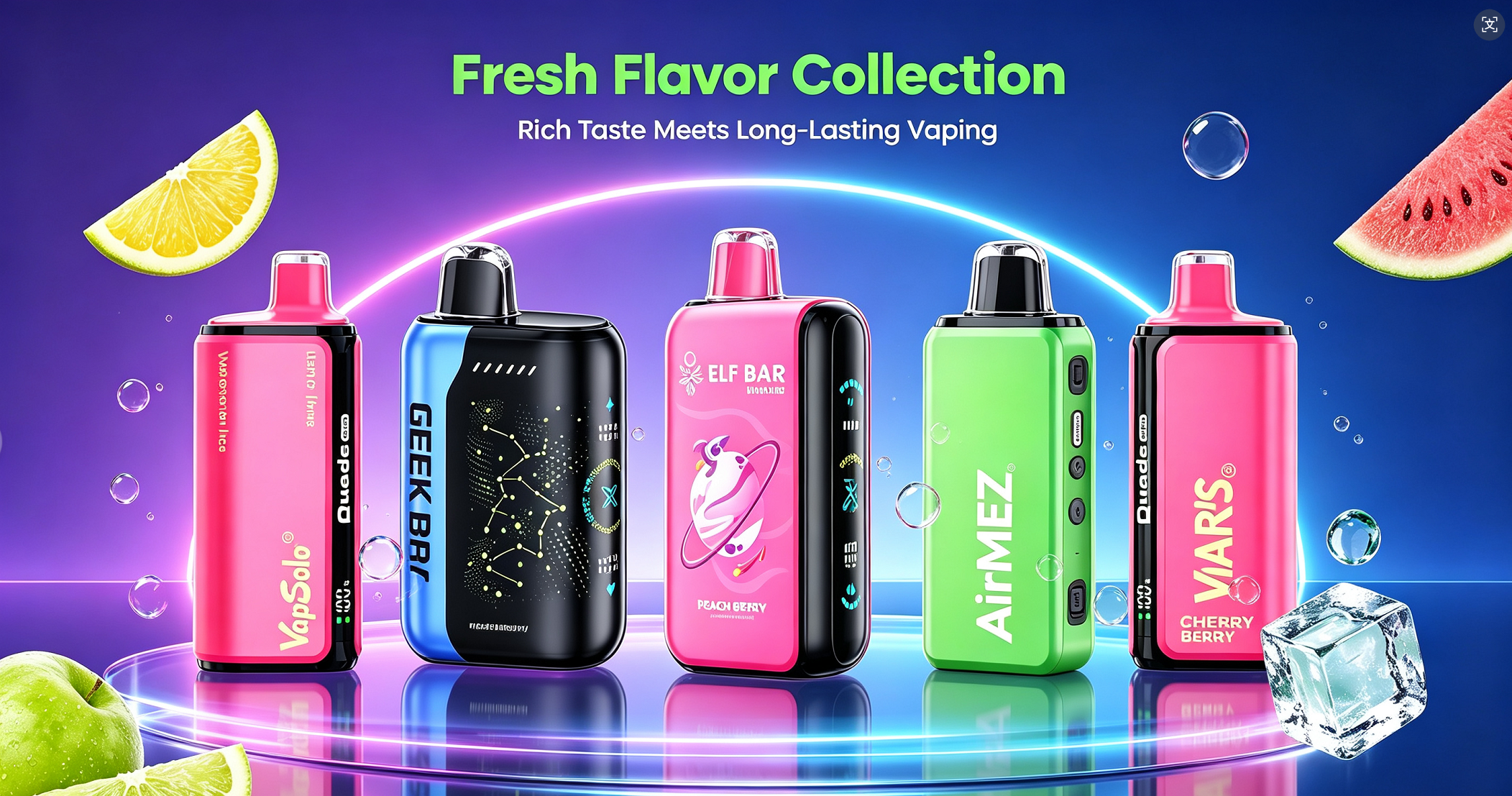
All devices below are fully compliant with current EU/UK regulations, tested for consistent flavor performance, and available for retail and wholesale purchase via VapeVeo.
| User Segment | Recommended Device | Core Advantages | Action |
|---|---|---|---|
| Heavy Users & Flavor Variety Seekers | Vapsolo Quads 80K | 4 independent sealed flavor chambers, zero crossover, 80,000 total puffs, upgraded mesh coil for 70% performance boost | Wholesale Inquiry |
| Tech-Focused Users & Premium Retail | Geek Bar Pulse X 25K | Dual power modes, real-time smart display for battery/liquid level, dual mesh coil, Type-C fast charging | Shop Now |
| Flavor Purists & Daily Use | ELFBAR D3 25000 | Precision dual mesh coil, fully adjustable MTL/DTL airflow, smart real-time display, consistent zero-burnt-hit performance | View Details |
| High-Volume Bulk Retail Bestseller | Airmez FOX 4-in-1 120K | 120,000 total puff capacity, quad flavor switching, rechargeable design, exceptional wholesale margin potential | Contact for Bulk Pricing |
| Entry-Level Switchers | Vapsolo Super Pro 30000 | Plug-and-play design, 30,000 puff lifespan, stable flavor performance, low entry cost for first-time switchers | Browse Full Vapsolo Range |
5. Retailer Transition Playbook: Build a Compliant 2026–2027 Inventory
For vape shop owners and regional distributors, the transition away from disposables is not just about swapping products—it is about restructuring inventory to capture migrating users while minimizing compliance risk. Follow this 4-step framework to build a sustainable, high-margin product lineup.
- Phase out low-turnover disposable inventory immediately: Prioritize clearance of slow-moving SKUs before further regulatory restrictions take effect, and avoid restocking any single-use products for long-term inventory.
- Build a tiered reusable hardware lineup: Stock entry-level devices for price-sensitive switchers, mid-range premium models for regular users, and multi-flavor high-capacity units for heavy users. This covers 90% of migrating disposable customer segments.
- Pair hardware with matching bar-salt e-liquid ranges: Bar-salt formulations replicate the sweet, icy flavor profiles of popular disposables, reducing friction for new switchers. E-liquids deliver the highest repeat purchase rate of any vaping product category.
- Implement in-store recycling take-back programs: Compliant with UK WEEE rules and upcoming EU EPR requirements, take-back bins build customer trust and position your business as a responsible, forward-thinking retailer.
We provide custom inventory transition plans for EU/UK retailers and distributors, including tiered wholesale pricing, fast local warehouse shipping, and compliance documentation for all products. Contact our team for a tailored 2026 stock strategy.
6. Evidence-Based Context: Vaping as a Harm Reduction Tool
For adult smokers considering switching to vaping, the public health evidence base remains consistent and peer-reviewed.
It is important to note that vaping is not risk-free, and is intended exclusively for adult current smokers as an alternative to combustible tobacco. Non-smokers and young people should not use any nicotine products. All products sold by VapeVeo carry strict 21+ age verification requirements.
7. Step-by-Step User Guide: Switch Without Losing Flavor
Follow this simple workflow for a seamless transition from disposables to high-capacity systems:
- Choose a matching bar-salt e-liquid: Formulated to replicate the exact flavor profiles of top disposable brands, bar-salt nic salts eliminate the biggest complaint of new switchers. Explore top-selling flavor options here.
- Select a device matched to your usage: Light users can start with 25,000 puff entry-level models; heavy daily users should opt for 60,000+ puff multi-chamber devices to minimize maintenance.
- Follow the 20% refill rule: Never let your pod run completely dry. Refill when e-liquid reaches the 20% mark to avoid burning the wick and permanently ruining flavor quality.
- Perform simple weekly maintenance: Wipe pod contact points with a cotton swab to remove e-liquid residue, ensuring consistent power delivery and stable flavor performance.
- Replace pods on schedule: When you notice subtle flavor fade or a faint burnt taste, replace the pod. Most premium pods support 15–30 full refills before replacement.
Frequently Asked Questions (Structured Data Enabled)
Q: Will vaping remain legal after the 2026 disposable vape bans?
A: Yes. All current EU TPD3, UK Tobacco & Vapes Act and US FDA regulations exclusively target single-use non-refillable disposable devices. Rechargeable high-capacity pod systems, refillable tanks and bottled e-liquids remain fully legal when meeting regional compliance and safety standards.
Q: Can reusable vapes match the flavor of disposable vapes?
A: Yes. 2026-generation dual mesh coil systems deliver equal or superior flavor intensity compared to disposables. Pairing a mesh pod device with bar-salt formulated e-liquids replicates the exact taste profile of popular disposable brands, with consistent flavor across dozens of refills.
Q: How long does a high-capacity vape pod last before replacement?
A: Premium 2026 pods from brands like Vapsolo, ELFBAR and Geek Bar typically support 15 to 30 full refills (approximately 50ml to 80ml of total e-liquid) before noticeable flavor degradation. Exact lifespan varies by usage habits and e-liquid composition.
Q: Are high-capacity vapes cheaper than buying disposables?
A: Yes. While the initial device costs $25–$45 upfront, ongoing monthly costs for pods and e-liquid are roughly 70% lower than regular disposable purchases. Most users reach the break-even point within 3 weeks of switching.
Q: What is the EU TPD3 revision and how will it affect vape retailers?
A: TPD3 is the third revision of the EU Tobacco Products Directive, currently in public consultation phase and expected to take effect in 2027. Key proposed changes include a bloc-wide disposable ban, expanded EPR waste requirements, and extended regulation of all nicotine products. Retailers should prioritize compliant rechargeable inventory ahead of implementation.
Q: Where can EU vape retailers buy TPD-compliant sustainable vapes wholesale?
A: VapeVeo.com is a leading global supplier of TPD-compliant high-capacity vaping systems, with local EU warehouses offering 2–3 day DPD delivery. We provide custom wholesale pricing, compliance documentation and inventory transition support for vape shops and regional distributors.
Q: Is vaping better for you than smoking cigarettes?
A: Public health consensus from NHS and Cochrane research confirms that regulated nicotine vaping is significantly less harmful than smoking combustible cigarettes, which contain thousands of toxic chemicals. Vaping is intended as a cessation tool for adult smokers who cannot quit through other methods.
Final Verdict: The Sustainable Vaping Future Is Here
The shift away from single-use disposable vapes is an irreversible, global trend driven by regulation, environmental policy and maturing consumer expectations. Far from being a step backward, the transition to high-capacity eco-systems delivers tangible improvements for every stakeholder:
- Adult vapers get better flavor consistency, lower long-term costs and more product choice
- Retailers get higher profit margins, recurring revenue and reduced regulatory risk
- Communities get dramatically less hazardous electronic waste and fewer battery-related waste facility fires
For businesses, the window to establish market leadership in the sustainable vaping category is now. Early adopters who build compliant, curated inventory lines will capture the largest share of the millions of users migrating away from disposables across Europe and North America.
Disclaimer: This content is for educational and informational purposes only, intended exclusively for adults aged 21 and over. Nicotine is an addictive chemical. Vaping products should only be used by adult current smokers as a harm reduction alternative to combustible tobacco. Always follow local regulations regarding the purchase and use of nicotine products.